The Shinkansen
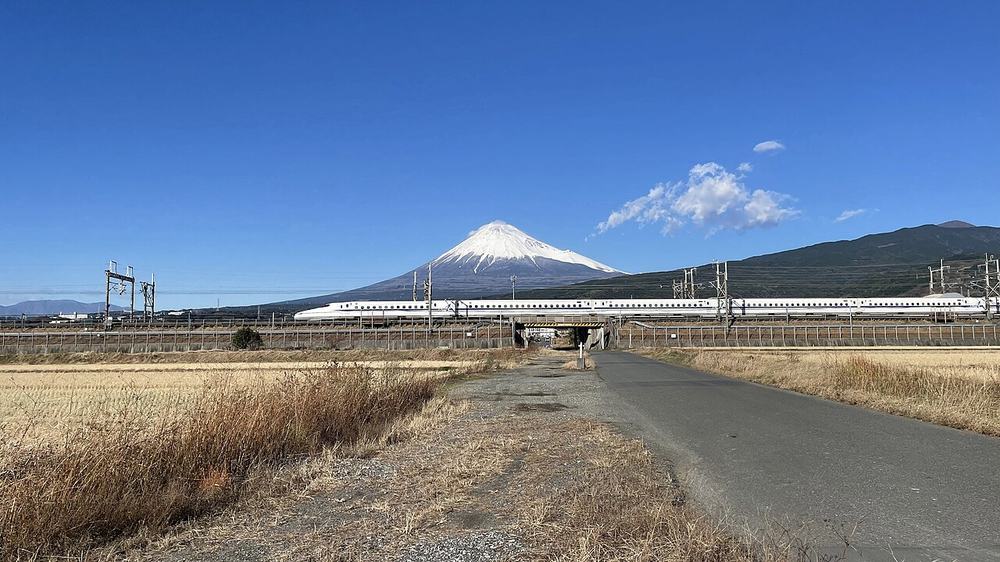
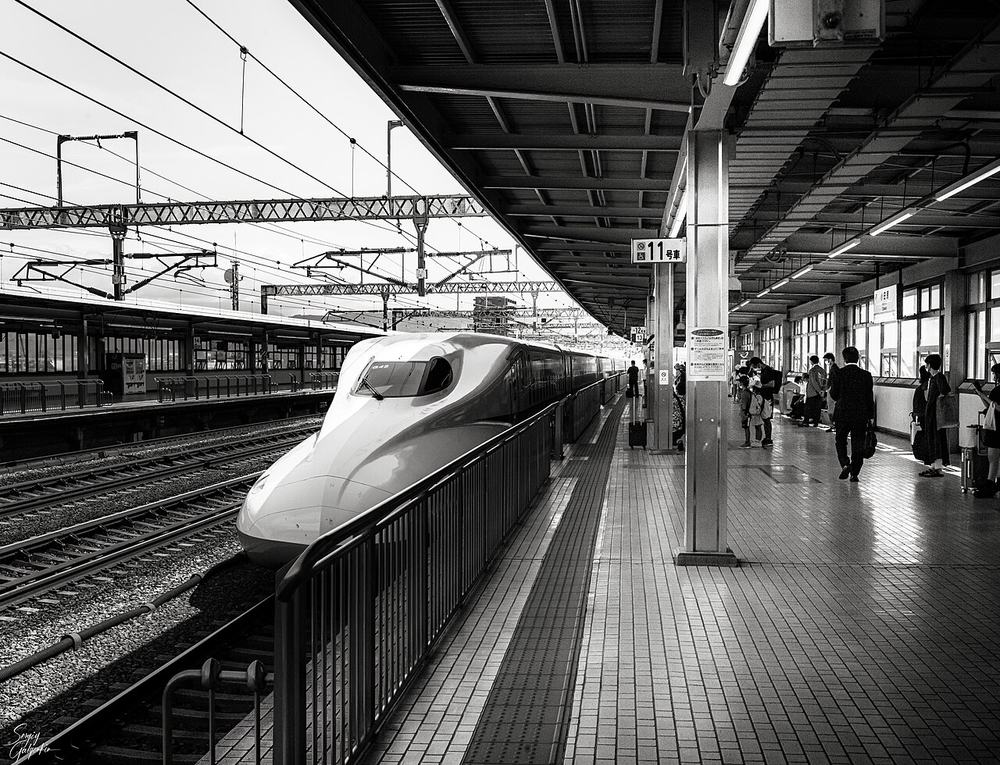
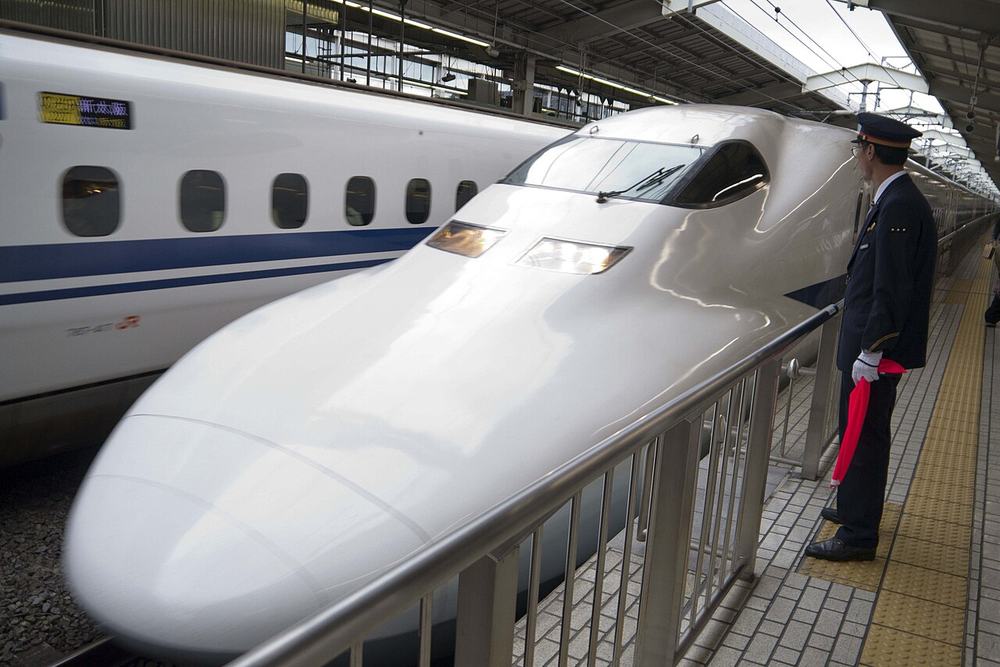
On the morning of 1 October 1964, a train left Shin-Osaka station at 6 a.m. and reached Tokyo four hours later, at 210 kilometres per hour — faster than any train in the world had ever travelled in regular service. Nine days later Tokyo hosted the Olympic Games. The train was the Shinkansen, the bullet train, and it became the symbol of the new Japan: fast, precise, safe, and built from nothing in five years. Sixty years on, it has carried billions of passengers and never killed one of them in a derailment or a collision.
In short
The Shinkansen is Japan's network of high-speed railways. The first line, the Tokaido Shinkansen between Tokyo and Osaka, opened on 1 October 1964, nine days before the Tokyo Olympics. Its first trains ran at up to 210 kilometres per hour (130 miles per hour) and covered the journey in four hours, later cut to three hours and ten minutes. It was the first high-speed railway in the world, and the model for every high-speed line that followed, from France's TGV to China's high-speed network. Today the network runs from Aomori in the north to Kagoshima in the south, and the fastest trains reach 320 kilometres per hour.
A train built from ruins
Japan's first railway had opened in 1872, between Shinbashi in Tokyo and Yokohama. By the 1950s the old narrow-gauge line between Tokyo and Osaka, the busiest corridor in the country, was full: the fastest conventional trains took six and a half hours, and no more trains could be fitted in. The answer was a new line, built to standard gauge, with no level crossings, no sharp curves, and its own dedicated tracks.
Construction began on 20 April 1959. The project was a gamble: when the Japanese National Railways launched its feasibility study in 1956, Japan's economy had only just passed its pre-war peak, and the original budget of 194.8 billion yen was set low to win government approval. The final cost was nearly double, about 380 billion yen, and the World Bank lent 80 million dollars towards it. Both Hideo Shima, the engineer in charge, and Shinji Sogo, the railway's president, resigned in 1963 over the cost overruns — and then watched their train open on time for the Olympics.
The first-generation trains, the 0 series, with their distinctive rounded noses, became the first commercially operated trains in the world to run at 210 kilometres per hour. The line was built in just five years and five months, through 66 tunnels and over 96 bridges, past Mount Fuji and through the mountains between the two cities.
Sixty years without a fatal accident
The Shinkansen's safety record is unmatched in transport. In sixty years of operation, no passenger has ever been killed in a derailment, a collision or any other train accident — a record that covers, on the Tokaido line alone, about 7 billion passengers. Trains run in a country shaken by earthquakes, and the system is built for them: sensors detect a quake and stop the trains before the shaking arrives, and no Shinkansen has ever derailed with fatal consequences in an earthquake.
The trains are also famously punctual. Average delays are measured in seconds over a whole year, and a delay of a few minutes makes the news. That precision is a system, not a slogan: dedicated tracks, trains that all run at the same speeds, platforms built for fast turnarounds, and staff who clean a whole train in seven minutes between services.
Speed has risen steadily since 1964. The Tokaido line now runs at up to 285 kilometres per hour, and the Tohoku Shinkansen in the north reaches 320 kilometres per hour, matching the fastest trains in Europe. The network has grown with it: from the first line between two cities, it now stretches the length of Honshu and into Kyushu, carrying about 150 million passengers a year on the Tokaido line alone in recent years.
What the bullet train changed
The Shinkansen changed how Japan works. It made day trips between Tokyo and Osaka, and later between Tokyo and the far north and south, routine, and it tied the country together more tightly than any road or airline could. Business, government and family life all adjusted to a country that could be crossed in hours rather than days.
It also changed the world. France's TGV, which began running in 1981, Germany's InterCity Express in 1991, and the high-speed networks of Spain, Italy, Korea and China all learned from the Shinkansen's example. The idea that a train could be faster than a plane over a few hundred kilometres, and more comfortable as well, started in Japan in 1964.
The next step is already being tested: a magnetic levitation line, the Chuo Shinkansen, on which test trains have reached 500 kilometres per hour. Its opening, planned for 2027, has been delayed, and no new date has been fixed. For now, the trains that opened in 1964 still run, faster than ever, on the line that started it all.
Key dates
| Date | Event |
|---|---|
| 1872 | Japan's first railway opens, Tokyo to Yokohama |
| 20 April 1959 | Construction begins on the Tokaido Shinkansen |
| 1963 | The railway's president and chief engineer resign over cost overruns |
| 1 October 1964 | Tokaido Shinkansen opens, Tokyo to Osaka, at 210 km/h |
| 10 October 1964 | Tokyo Olympics open |
| 1965 | Tokyo to Osaka journey cut to 3 hours 10 minutes |
| 1970 | Shinkansen trains lengthened to 16 cars for Expo 70 |
| 1981 | France's TGV begins running, following the Shinkansen's example |
| Today | Fastest Shinkansen services reach 320 km/h; about 7 billion passengers carried on the Tokaido line |
| 60 years | No passenger killed in a derailment or collision |
Sources: Nippon.com, "The Shinkansen Turns 50"; The Japan News, "The Tokaido Shinkansen: 60 Years of Continuing Evolution"; International Railway Journal, "Shinkansen: half a century of speed". Checked 28 November 2026.